
Pablo Marull
Ideas on economics, financial markets, and long-term investment decisions.
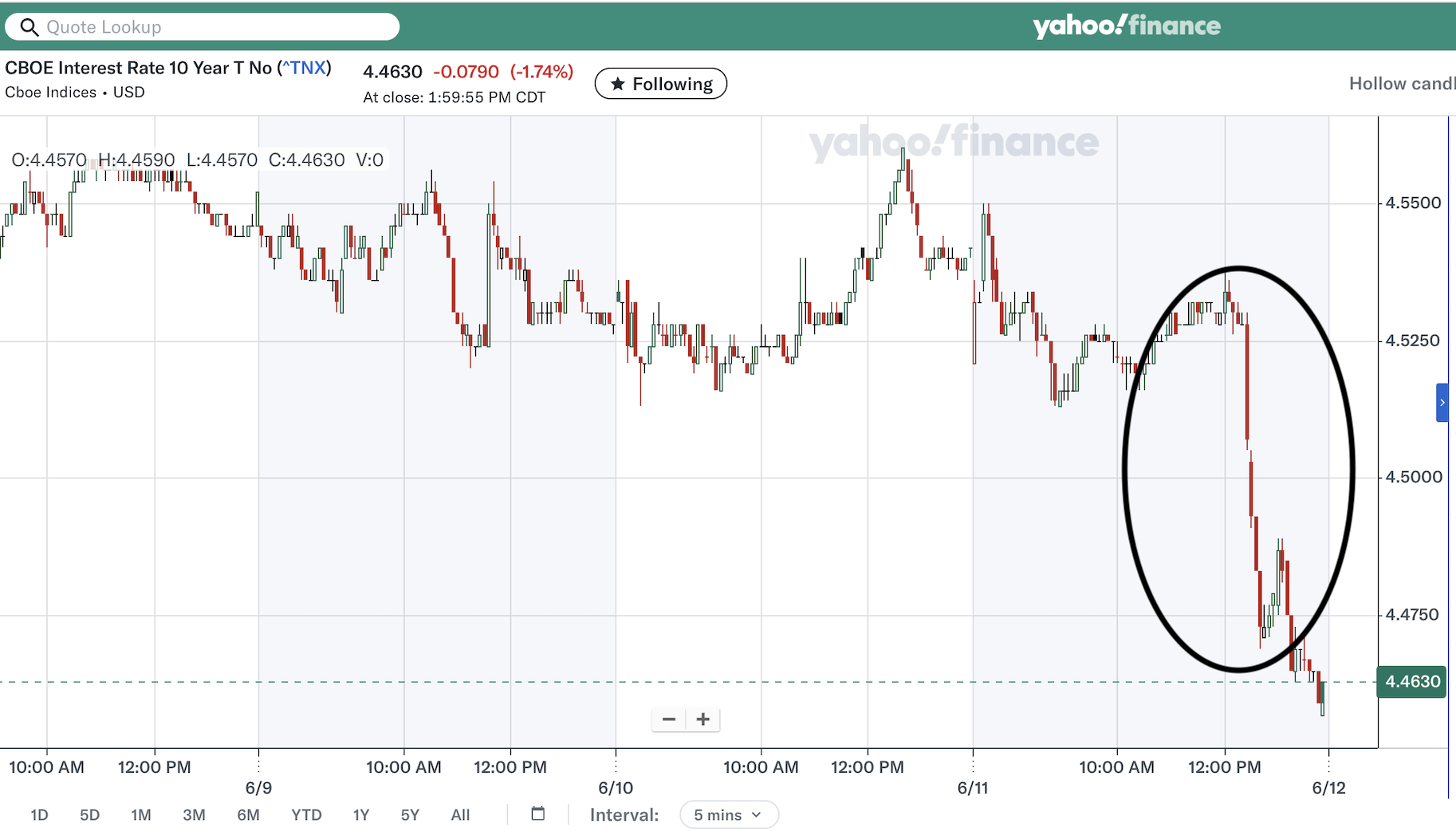
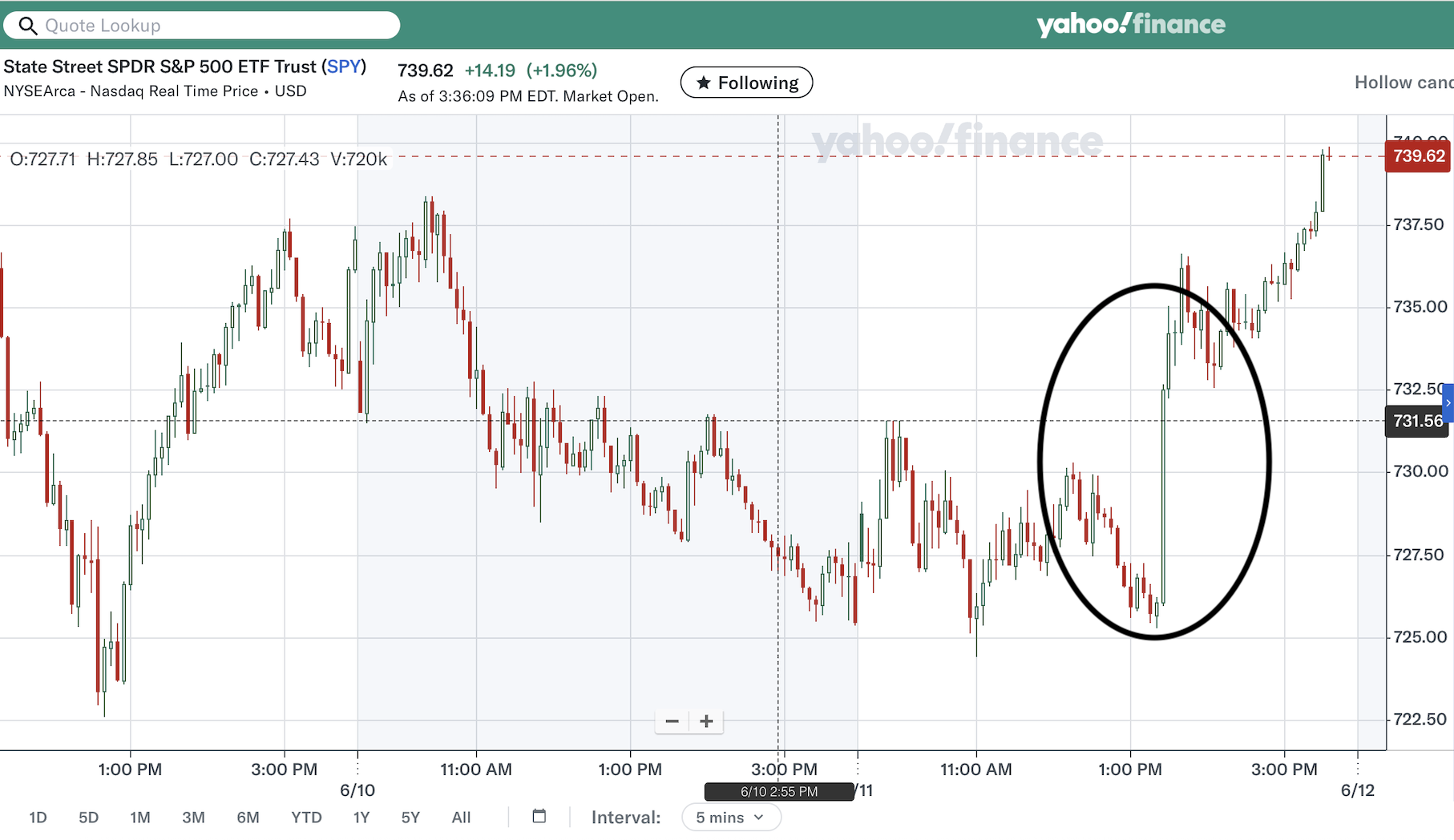
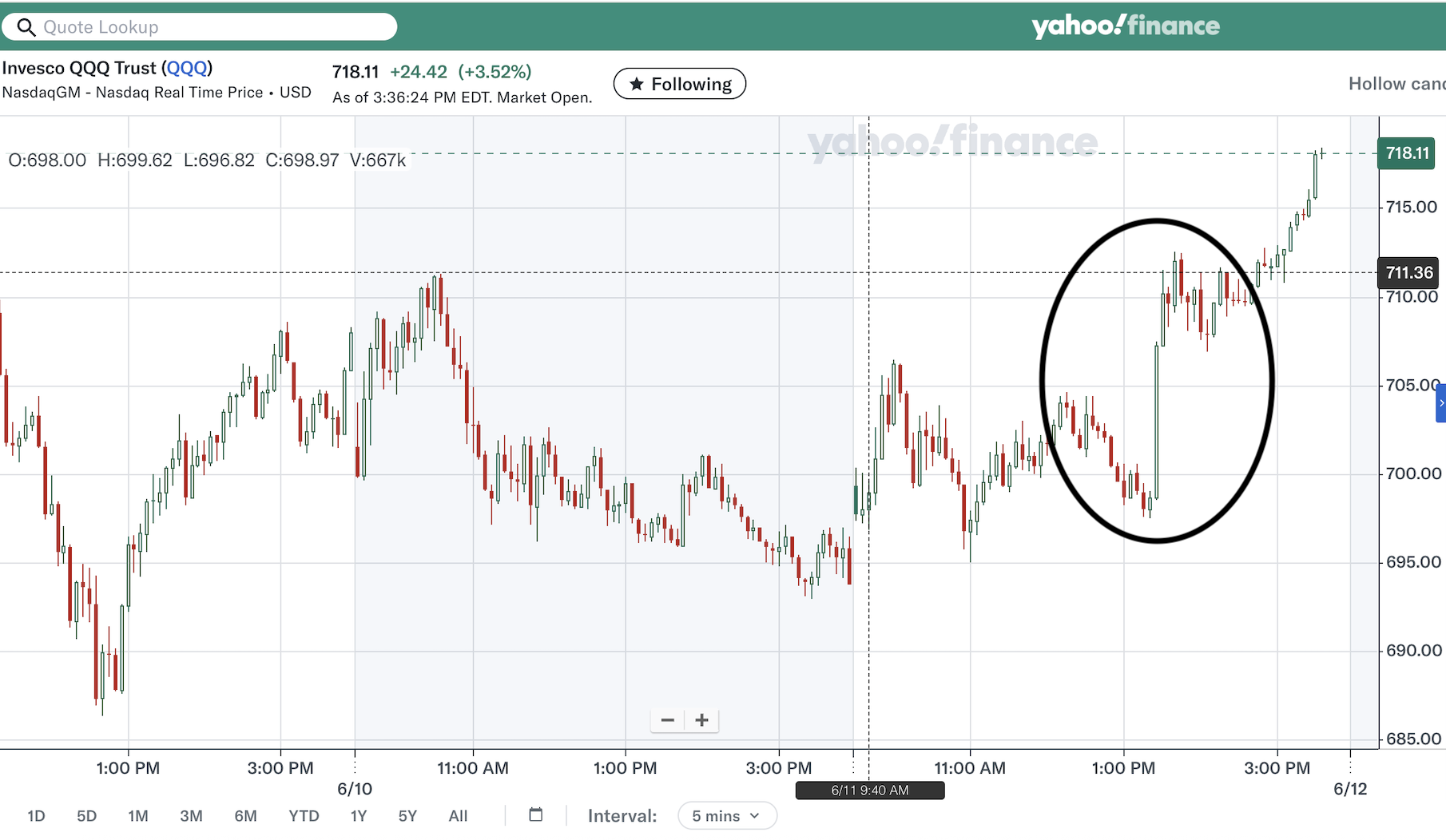
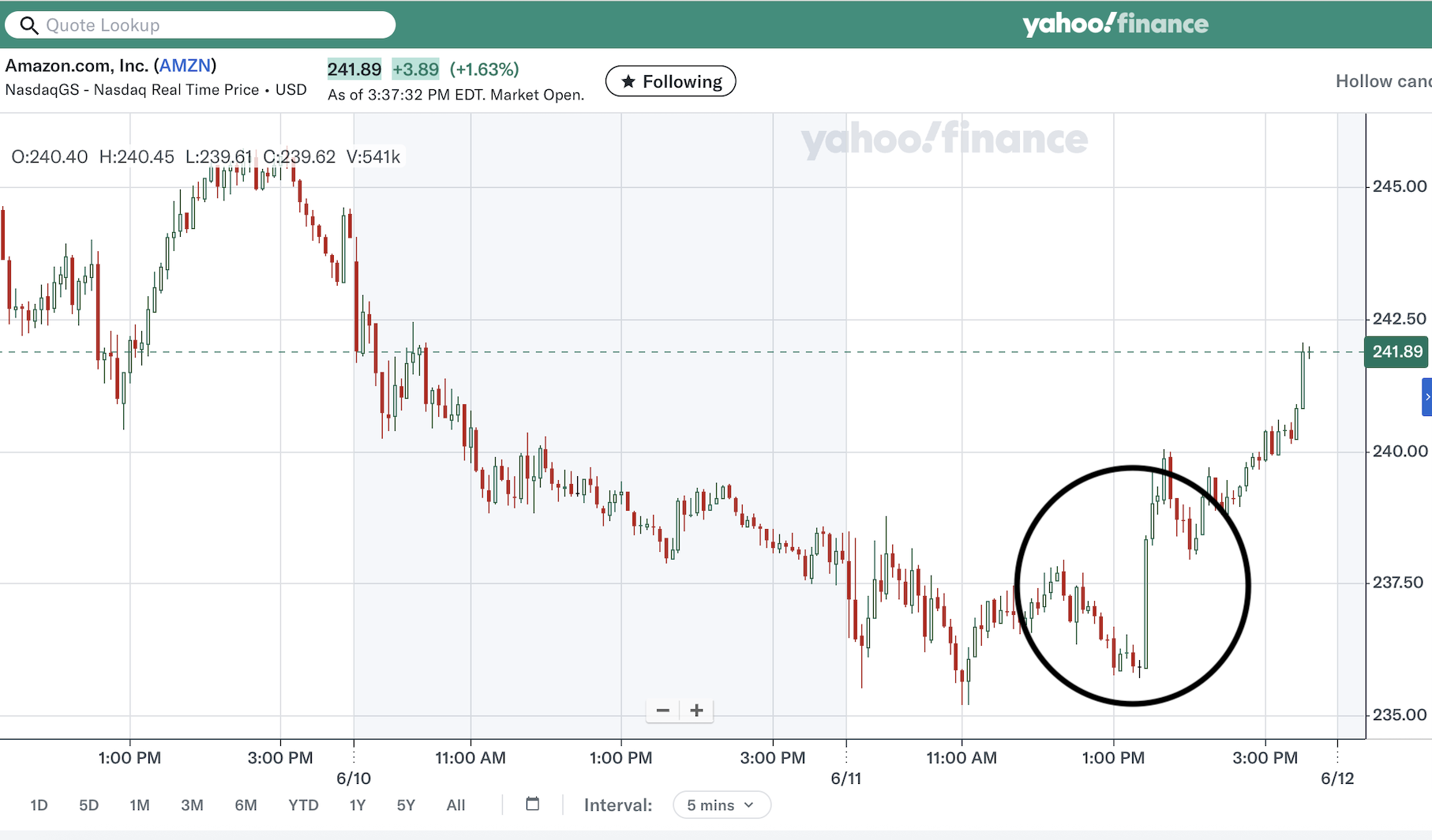
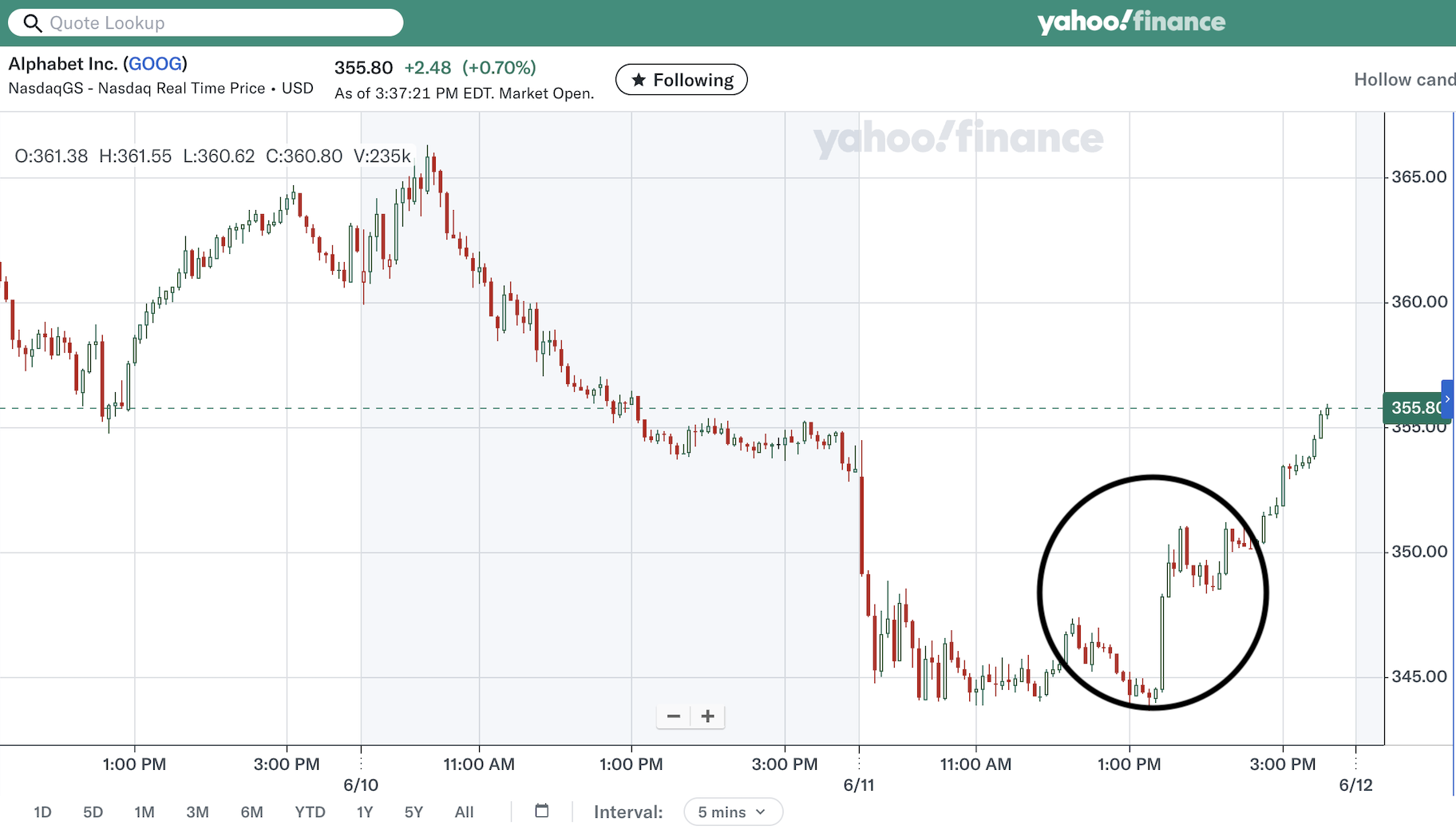
What drove that synchronized move on June 11 at ~1:25 PM EST
The catalyst was a geopolitical headline, not an economic data release. President Trump announced that the U.S. would cancel strikes planned for that evening against Iran, stating that all points of a deal were essentially agreed upon — strongly implying the U.S.-Iran war could be coming to a close. This triggered an immediate, broad "risk-on" surge across equities and a simultaneous drop in Treasury yields
TNX Interest rate 10Y
SPY ETF
QQQ ETF
AMZN
GOOG
MU
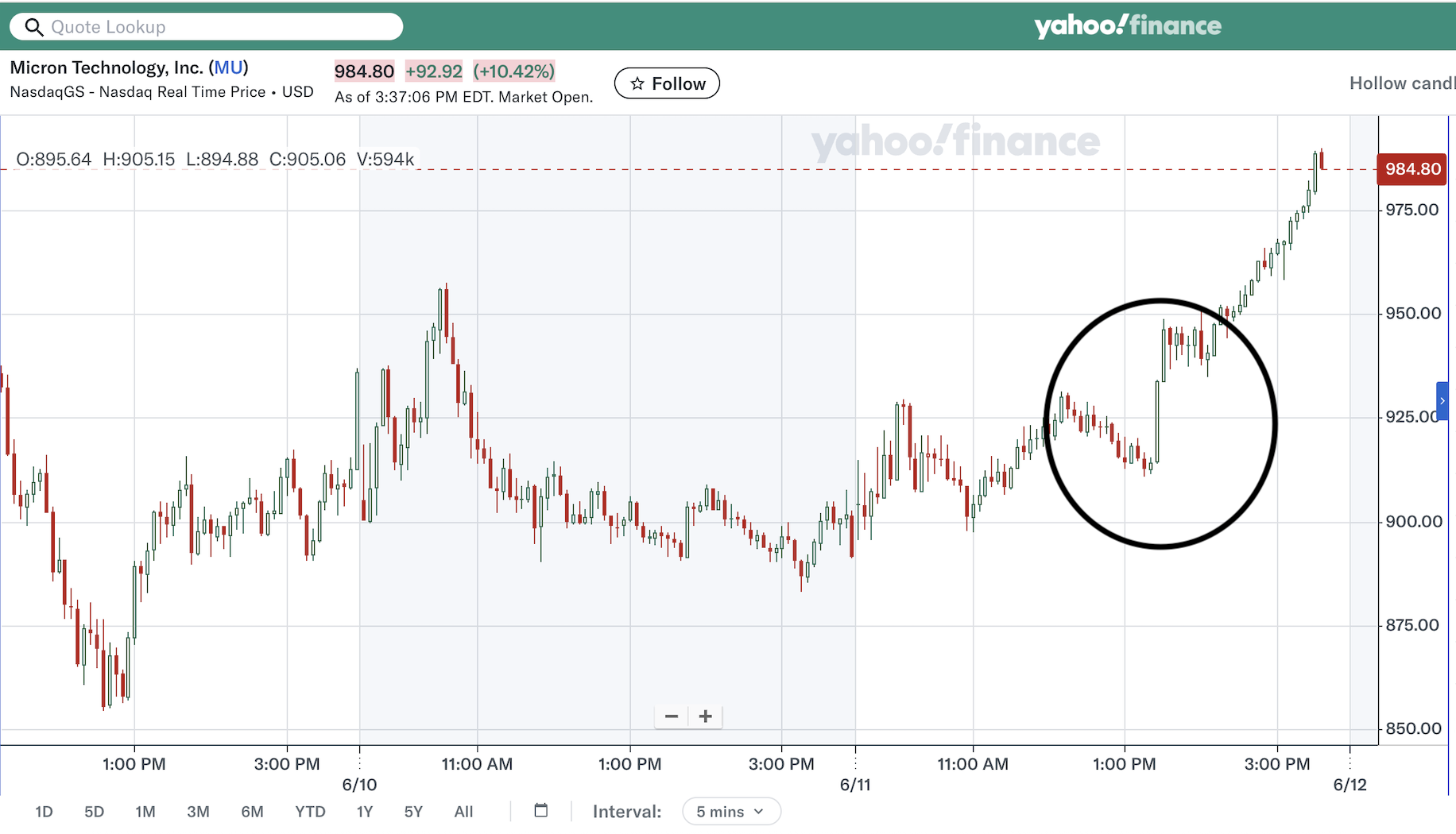
Why stocks (SPY, QQQ, AMZN, MU) went UP
-
Peace deal = end of the "war premium." The US-Iran conflict had been weighing on markets for months. The bond market had been pricing in a "worst-case scenario" involving a sustained conflict in the Middle East, which had driven the 10-year yield toward the 4.5% psychological barrier and created a "war premium" embedded in risk assets. A potential deal removes that premium instantly. financialcontent
-
Oil prices collapsing = inflation relief. News that a peace deal might be near would lift oil sanctions on Iran and reopen the Strait of Hormuz — crude oil fell sharply on the news. Lower oil = lower input costs = lower inflation expectations = equities re-rate higher. Charles Schwab
-
Tech and semiconductors (QQQ, AMZN, MU) are especially rate-sensitive. Their valuations are driven by discounted future cash flows — when yields drop, those future earnings are worth more today, so they get an outsized boost.
-
The Russell 2000 rose +3.02%, while large-cap indexes like the Nasdaq (+2.54%), Dow (+1.86%), and S&P 500 (+1.75%) also saw significant jumps on the de-escalation.
Why the 10-year Treasury yield (TNX) went DOWN
-
This is the inverse relationship between bond prices and yields, combined with a shift in expectations:
-
Inflation fears faded fast. With oil dropping sharply, the main driver of the "higher for longer" rate narrative (energy-driven inflation) weakened immediately. Less inflation pressure = less need for the Fed to hike or stay restrictive.
-
Flight out of safe havens. During the conflict, capital had piled into Treasuries as a safe haven, pushing yields up. When geopolitical risk fades, that safe-haven bid reverses — but on a peace catalyst, yields actually fell because the inflation/rate-hike fear was the stronger force.
-
The rates market moved from fully pricing a Fed hike by December toward pushing that risk into early 2027 — a major shift that directly pushed yields lower.
The synchronization is not a coincidence — it's one single narrative (end of war = end of oil shock = end of rate hike fears) flowing simultaneously through every asset class. Algorithmic traders, ETFs, and macro funds all respond to the same headline at the same millisecond, which is why you see the move across all those tickers at exactly 1:25 PM.
